

Inspired by Nature.
Empowered by Technology.
Committed to Life.
Advancing Human-Relevant Systems to Reduce Reliance on Animal Models
Integrated • Predictive • Translational
Accelerating Smarter, More Human-Relevant Medicine

3D Cell Culture Platform


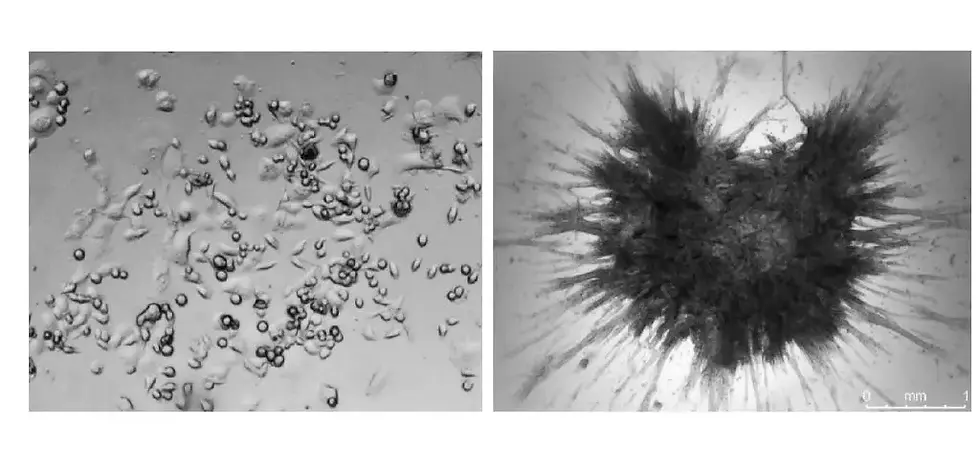


3D cell cultures offer several advantages over traditional 2D cell cultures, transforming the way researchers study cell behavior, disease mechanisms, and therapeutic response. Through its collaboration with Real Research, NAMina Bio integrates advanced 3D cell culture technologies into a broader translational workflow that connects model selection, experimental design, drug screening, omics integration, AI-supported analytics, and actionable scientific reporting.
More physiologically relevant
3D cell cultures better mimic the complex three-dimensional architecture and cellular interactions found in living tissues and organs. This enhanced physiological relevance allows researchers to study cell behavior, function, and responses in a more realistic and representative environment.
Improved cell-cell and cell-matrix interactions
Cells in 3D cultures can interact and communicate with neighboring cells and their surrounding extracellular matrix, closely resembling the natural cellular environment. This enables the formation of intricate cell networks, cell signaling pathways, and tissue-specific structures that are absent in 2D cultures.
Enhanced cell differentiation and maturation
3D cell cultures often promote better cell differentiation and maturation compared to 2D cultures. The spatial organization and cellular interactions within 3D environments can stimulate cells to adopt specialized functions and phenotypes that more closely resemble in vivo conditions.
Better drug efficacy and toxicity testing
3D cell cultures provide a more accurate platform for drug testing compared to 2D cultures. The complex architecture of 3D cultures allows for better assessment of drug penetration, metabolism, and response, leading to improved prediction of drug efficacy and toxicity in human tissues.
Disease modeling and personalized medicine
3D cell cultures enable the creation of disease models that better recapitulate the characteristics of specific diseases or patient populations. Researchers can study disease progression, test therapeutic interventions, and develop personalized treatment approaches using patient-derived cells within 3D culture systems.
Reduced reliance on animal models
By providing a more representative cellular environment, 3D cell cultures offer an alternative to animal models in selected areas of research. This reduction in animal use aligns with ethical considerations and contributes to more sustainable and humane scientific practices.
Integration with advanced technologies
3D cell cultures can be combined with advanced technologies such as microfluidics, live imaging, genetic engineering, omics, and AI-enabled analytics. NAMina Bio adds value by integrating these technologies into fit-for-purpose workflows, helping researchers move from isolated assays toward more connected, interpretable, and decision-ready translational studies.
Translational research potential
The advancements made in 3D cell culture techniques and their increasing similarity to in vivo conditions hold significant promise for translational research. Findings from 3D cell culture studies have the potential to better predict biological responses and support the development of novel therapies and treatment strategies.
3D cell cultures provide a more physiologically relevant and versatile platform for cellular research, offering greater insights into disease mechanisms and drug responses compared to traditional 2D cell cultures. NAMina Bio strengthens this potential by connecting 3D model development with upstream study design, downstream screening, data integration, AI-supported interpretation, and structured scientific reporting.
